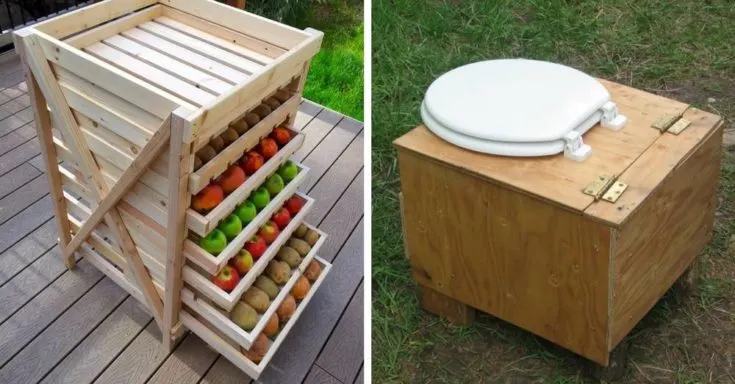
Showing posts with label diy. Show all posts
Showing posts with label diy. Show all posts
Friday, November 17, 2023

Monday, March 4, 2019
Stone Oven -How to Build
Here's an interesting instructable in how to build and use a primitive stone oven. Would be nice to know how to build one for a survival situation or have one in your back yard.
Source:
https://www.instructables.com/id/Stone-Oven-How-to-Build-Use-Primitive-Cooking-Tech/?utm_content=buffer67625&utm_medium=social&utm_source=pinterest.com&utm_campaign=buffer
 |
| stone oven |
 |
| stone oven |
Source:
https://www.instructables.com/id/Stone-Oven-How-to-Build-Use-Primitive-Cooking-Tech/?utm_content=buffer67625&utm_medium=social&utm_source=pinterest.com&utm_campaign=buffer
Friday, January 6, 2017
14 Survival Tips That May Save Your Life Someday Vol. II
 |
| homemade arrow |
In the case of an emergency, doing the right thing or having the right skill could make the difference between life and death, it can save your life or someone else's life. We have compiled a collection of some of the most crucial information and skills you should have to know what to do in an emergency or a disaster. It's really important that you and your family and your friends to have this knowledge.
More from the source
Friday, December 9, 2016
21 DIY Emergency Preparedness Hacks
1. Strap a headlamp onto a water jug to make a light.
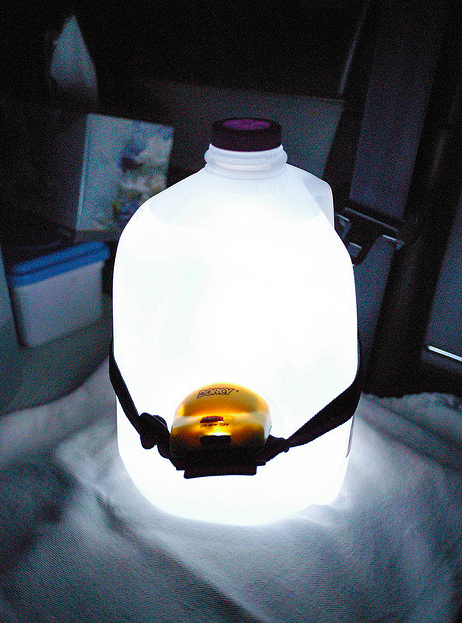 |
| Milk Jug Light |
2. Make a candle out of Crisco.
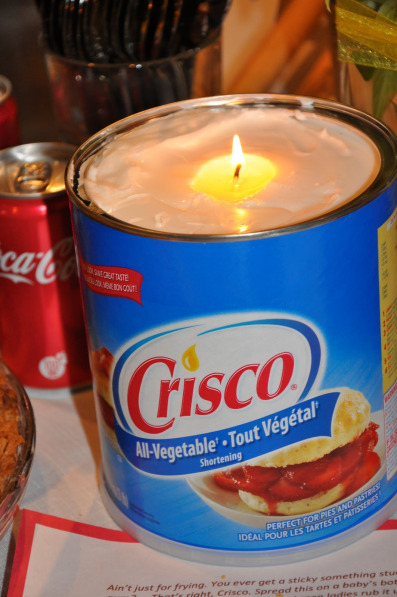 |
| Crisco Candle |
3. Or out of olive oil.
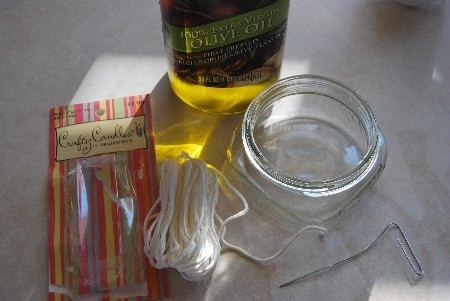 |
| Cooking Oil Candle |
4. Stock up on batteries and keep them organized and protected from water damage.
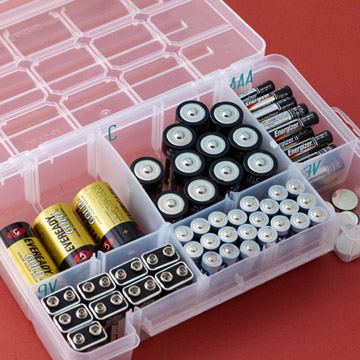
5. Convert AAA batteries to AA batteries with tin foil.
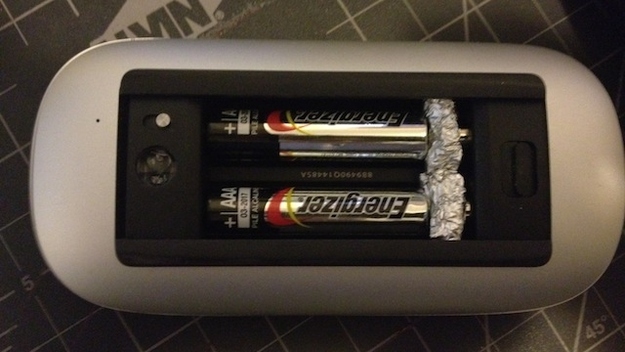 |
| Convert AAA batteries to AA |
Tuesday, December 6, 2016
Wednesday, June 8, 2016
Repurpose a Spoon Into an Arrowhead

This is a neat video that will walk you through the process of repurposing a spoon into an arrowhead. For folks that like diy projects this looks like it would be a nice indoor project. Possibly on a rainy weekend or in the winter when you really don’t want to be outdoors a lot. Brayden Casse shows you each step to make the arrowhead.
From heating and hammering the spoon flat all through the steps to the end where he polishes the arrowhead twice. He says that you don’t need a dremel to do this project but that it would make the job a whole lot easier. If you have an avid bow hunter in your family, imagine the look on their face if you presented them with a dozen of the arrowheads as a gift for a birthday or Christmas. Some folks are hard to buy for. I know a lot of dads get ties and cologne for every occasion.
This would be a great step away from the same ole same ole. They could probably be made into necklaces as well by soldering a loop to one side for a silver chain to go through. You may want to make the point a little dull if you were making a necklace out of the arrowhead though.
Source:


Monday, June 6, 2016
More Snares and Traps DIY

Editor’s note: This is a guest post from Creek Stewart of Willow Haven Outdoor.
I practice and learn survival skills not because I need them on a daily basis, but rather for the one day when I must use them to stay alive. Survival is the intersection between knowledge and necessity. The outcome in a survival scenario can be dramatically influenced by practicing survival skills before you need them. One such skill that requires thoughtful practice is How to Build a Small Game Survival Snare. A primitive make-shift snare can be used to trap and kill a variety of animals for food in a survival situation. This basic concept can also be modified and used as a “man-trap” or “perimeter alarm”–both of which are commonly deployed in guerrilla warfare.
While constructing a survival snare is fairly simple, it is often oversimplified with vague instructions and limited photos. By the time you finish reading this article you will know the who, what, why, when, where, and how of the simplest and most efficient survival snare known to man. If your knowledge ever crosses paths with necessity, this may prove useful.
The Why
For short term survival (1-7 days), food is not a critical priority. Shelter, water, fire, and signaling are typically more immediate concerns. At some point, though, you must put calories on the human furnace or suffer the debilitating consequences of starvation.To my knowledge there isn’t one single primitive culture, tribe, or people where meat is/was not a critical component of their diet. Modern equipment, farming, transportation, food processing, supplements, and complex supply chains give us the option not to eat meat if we choose. Remove these luxuries for an extended period of time and the calories from meat once again become necessary for survival. It would be extremely difficult, if not impossible, to source enough calories in a primitive survival scenario by gathering wild plant edibles alone–especially in cold weather climates or seasons.
Time and energy conservation are both very important factors to consider in any survival situation. This is precisely why snares are such an important survival tool. Once constructed and set, a snare will allow you to focus on other survival priorities. And, it will keep working even while you are sleeping. With 10 snares you can be hunting in 10 different locations at the same time while expending ZERO energy. You become a one man hunting party. Snares are a survivor’s secret weapon. Not only are snares incredibly reliable and effective, they also require very few resources to build–in materials, energy, and time.
The Who
Before you even think about spending time and energy on building and setting a snare, you must first determine whom (or in this case which animal) your snare is targeting. For survival purposes, small game represents your best chance of success. While the snare design I will show you can be scaled up to catch animals as large as deer, it is more practical to target small game animals such as rabbit, squirrel, and ground dwelling fowl such as quail or grouse. This snare can also be modified to fish for you as well. Not only are smaller game animals easier to catch and field dress, but you can set numerous small game snares with the same time and material resources it would cost you to set one larger snare. Setting snares is a numbers game. The more snares you set, the greater your odds of success.The When and Where
This snare can be effective in virtually any climate and any environment on any continent. It can be deployed any time of the year and is equally effective day and night. From desert to rain forest, I can’t think of a place where you can’t use some version of it to catch small game.With that said, placing random snares throughout the woods is foolish and a waste of time and energy. Though they can be baited to draw in animals, snares are most effective when strategically placed in-line with existing small game trails. As you will see in the HOW section of this article, the heart of this snare is a noose which should be positioned across a frequently traveled small game path or shelter entrance such as a den or burrow.
To be successful, you must read the forest or terrain in which you find yourself. You must look for signs of small game traffic and activity. These signs include scat (droppings), tracks, rubs, scratches, signs of feeding, shelter or burrow entrances, food and water sources, and well-traveled game trails.
I took a walk in the forest here at Willow Haven Outdoor and snapped a few photos of some telltale animal signs that should catch the eye of a passing survivor. See if you can identify the small game activity in these photos below:


The best place for the snare I detail in the next section is across a well-traveled small game path. These paths, called “runs,” typically lead from the nest, shelter, or den to water and food sources. Animals are the ultimate survivors and also live by the survival code of energy conservation. Consequently, several animals may travel the same trail or path on a regular basis. Animals travel the path of least resistance and strategically placed snares along this path can be very effective.
Finally…The What and the How
There are literally hundreds of different snare sets and designs–some of which are overly complex. If you only learn one snare design in your life, it should be what I call the Trigger Spring Snare. I wish I could take credit for the design, but it dates back to the beginning of mankind and versions of it have been used by primitive people in all parts of the world. It has been time-tested, field-tested and survival-tested. It is my #1 GO-TO Survival Snare set.The Trigger Spring Snare consists of 4 components which can be readily sourced in nearly any survival situation. These components are:
- The Noose (made from some kind of cordage–preferably wire)
- The 2 Part Trigger (carved from wood)
- The Leader Line (also made from some kind of cordage)
- The Engine (typically a bent over sapling)
The Noose
The noose does exactly what you think–it nooses the animal. The most effective noose material is wire. There are many different types of wire that will work. The wire must be flexible. It cannot be too thick or brittle. When set in the shape of a noose (shown later), it must tighten easily and quickly when pulled upon. Some examples are:- Twisted copper strands from the inside of an everyday lamp or small appliance power cord
- Picture hanging wire
- Stripped wire from car or vehicle electrical systems
- Craft wire
- Headphone wire
- Wire from a spiral bound note pad
- An uncoiled spring (such as in a ballpoint click pen)
- Wire reinforced bras
- Wire from inside electronics such as toys, phones, and radios

If wire is unavailable, some kind of string or cord will have to do. It must be strong enough to hold a 5-8 lb animal. If it snaps under the force of a couple jerks between your fists then it probably won’t work well.

Here are several alternative cordage ideas:
The inner strands from 550 Parachute Cord
- Shoe strings
- Dental floss
- Fishing line
- Unwoven webbing
- Strong stitching material such as what is used to sew together leather and outdoor goods such as purses, wallets, cell phone cases, belts, jackets, and backpacks

If no modern wire or cordage is available, there are many natural plants and tree bark fibers that can be fashioned into suitable cordage. Several excellent cordage plants/trees are:
- Milkweed
- Dogbane
- Stinging nettle
- Many inner tree barks such as cedar and elm
- Palm
- Cattail

The average length of your noose cord needs to be 18-24 inches for most small game animals. To construct your noose you need to make a small loop in one end about the diameter of a pencil. With wire you can simple make the loop and twist the wire back on itself several times.

With string, simply fold the end back onto itself and tie an overhand knot to secure the loop.

Then, run the other end of the cord/wire through the loop to create your noose. The tag end is then tied to your trigger as is detailed in the next section.
The Trigger and Leader Line
The trigger consists of 2 parts: the HOOK and the BASE. As you can see in the diagram below, the LEADER LINE is tied to the top of the HOOK and the NOOSE is tied to the bottom of the HOOK. The ENGINE (typically a bent over sapling) provides tension to the HOOK which is secured under the BASE–until an animal disengages it by pulling on the NOOSE. The LEADER LINE from the HOOK to the ENGINE can be any type of cordage. It needs to be strong enough to withstand the initial “spring jerk” and then the weight of the suspended (and struggling) animal.
Several Trigger Modifications
When it comes to this style of trigger, don’t limit yourself to one exact model. The same result can be accomplished in many similar ways. You may have to improvise in a survival scenario. It is the principle that is important. Below are several trigger modifications that I worked up to give you a few ideas.CARVED TRIGGER

This trigger style is simply carved from 2 hard wood sticks. Notice the BASE of the trigger system that is staked into the ground. The noose in the photo above is made from the inner strands of 550 paracord. Below is another photo of a carved trigger snare. This noose is made from the copper wires from inside an old lamp cord which makes an ideal noose material. Notice how I’ve used little twigs to hold my noose in place. This can be helpful to keep your noose exactly where you want it.

PRIMITIVE “Y” STICK TRIGGER

This trigger requires very little carving– simply find 2 sticks that branch how you need them and let nature provide your trigger system. The noose in this photo is made from the fibers of a raffia palm tree. This BASE is also staked into the ground.
PEG STYLE TRIGGER

Rather than having a BASE that is staked in the ground, the HOOK of this trigger system is secured on a peg or nail that you can place in a nearby log, stump, or tree. I’ve even created triggers that have hooked onto nearby rock ledges. This photo also features a “baited trigger.” I have sharpened the bottom of the hook and stuck on a piece of bait (raisin) to lure an animal through the noose. As soon as the bait is tampered with, the HOOK disengages. Make sure the animal must put its head through the noose to access a baited trigger.
Fishing Modification
This same trigger snare principle can be used with a hook and line for fishing as well. Instead of using a noose, attach your fishing line to the bottom of the HOOK TRIGGER. When a fish pulls your line and disengages the trigger, the ENGINE will pull and set the hook in the fish’s mouth. Make sure your TRIGGER HOOK is just barely set so that the slightest tug from a nibbling fish engages the ENGINE. See the diagram below:
The Engine
Every environment is different and unique. There may not be a sapling to bend over along a game trail. Or, you may be in the middle of a prairie or field where there are no trees at all. If so, you must improvise. There are many ways to do this. One way is to simply cut down a green sapling or branch from another area and stake it in the ground to use as an ENGINE. Your LEADER LINE can also be weighted and run over a branch or make-shift tripod to serve the same purpose. In the photo below I’ve weighted the LEADER LINE with a 10 pound rock that applies tension to the TRIGGER. I used the bark from a root as the LEADER LINE and a NOOSE made from braided cattail leaves–this is a 100% primitive snare set.
In the set below, I used a similar principle except I erected a make-shift tripod to serve as an anchor point for the LEADER LINE. Here, the LEADER LINE is a high visibility 550 Paracord.

Your ENGINE (whether a sapling, branch, or weighted system) should be powerful enough to suspend a small game animal in the air. This helps to ensure a faster and more humane kill and also keeps your catch away from other predators who would certainly be very interested in a free meal. If in doubt, you can test your snare ENGINE by using a 6-8 pound rock or log.
A NOTE ABOUT TIME AND ENERGY CONSERVATION:
The NOOSE from this snare system can be an incredibly effective snare by itself–without a TRIGGER or ENGINE. By securing the tag end of the NOOSE to a stake or tree and placing it across a burrow/nest entrance or a very well-traveled small game run, a trigger system may not even be necessary. This is a very popular method for snaring rabbits. It doesn’t get easier than this. Be prepared, though, for a live animal once you return in many cases. See the diagram below.

Directing the Traffic Flow
As I mentioned earlier, animals will typically follow the path of least resistance to conserve energy. Use this to your advantage by arranging sticks, logs, dirt, rocks, or other objects in such a way that funnels the animal into your snare NOOSE.Try not to disturb the area too much if possible. The more natural you leave it the better. Animals survive on INSTINCT and will react if something seems out of place. The forest is their home and they know it by heart. Leave as little trace of your activity as possible.
Conclusion
I’ll end this article with a list of Survival Snaring Guidelines that I follow and for you to consider.- Survival snares are for survival situations. Primitive improvised snares are otherwise illegal.
- The more snares you set, the greater your chances of success.
- If moving from an area, disable all snares you’ve set.
- Check your snare sets several times each day if possible–especially in warm weather. Your catch can spoil or be scavenged by other predators. And, if you have a live animal, you don’t want it to suffer longer than it has to.
- If you kill it, eat it. A diseased animal is the exception.
- Remains from previously snared animals make excellent bait for other snares–especially entrails.
- Meat is not the only survival resource that can be gained from snaring an animal. The hide can be used. Most animals have enough brains to brain-tan their own hide. Bones can be used as tools, hooks, and spear points. Intestines, sinew, and rawhide can be used for lashings and cordage. Use as much of the animal as possible. It has given its life for you.
The key to survival is not about mastering a single survival skill, but rather about being well-rounded in a variety of skills that can help provide you with basic needs–and FOOD is certainly one of these in an extended survival scenario. Energy conservation is very important and using snares to secure food is an intelligent use of time and resources. I hope you’ve taken away something useful from this post.
Remember, it’s not IF but WHEN,
Creek
____________________
Creek Stewart is a Senior Instructor at the Willow Haven Outdoor School for Survival, Preparedness & Bushcraft. Creek’s passion is teaching, sharing, and preserving outdoor living and survival skills. Creek is also the author of the book Build the Perfect Bug Out Bag: Your 72-Hour Disaster Survival Kit. For more information, visit Willowhaven Outdoor.
Source:
http://www.artofmanliness.com/2012/03/29/how-to-build-a-small-game-survival-snare/
Sunday, May 15, 2016
DIY Solar Food Dehydrator

I have posted about Solar Dehydrator and ovens before but this is a nice tutorial! Enjoy!
If you like dehydrated food, you would surely like to know how to make it at home. Drying your food can be very useful as it will help you preserve it for a longer period. You can also make lots of delicious and healthy snacks by using this technique, for instance drying all sorts of fruits. So if you want to try this at home, we recommend you to build your own solar dehydrator. Those that run on electricity will cost you a lot, so solar powered ones are a cheap and efficient option. The next tutorial will teach you how to make your own solar powered food dehydrator out of recycled materials. Such a great and useful tutorial!

Materials:
Thin Ply Wood (Body)
4 2.5′ Long 2″ x 4″s
10 feet of 2″ x 2″ wood (Braces and drying shelf support)
A Window (20″ x 23 1/8″) or a suitable slab of clear plastic.
Screen (For covering vents)
Stretchable Cloth/Material. We used stalkings. (For drying rack)
2 Hinges
Screws
Staples
Thermometer
A Hook & String (To fasten the rear door)
Caulk (For perfectionists)
Red more from the source http://www.goodshomedesign.com/diy-solar-food-dehydrator/
Books Of Interest:


Materials:
Thin Ply Wood (Body)
4 2.5′ Long 2″ x 4″s
10 feet of 2″ x 2″ wood (Braces and drying shelf support)
A Window (20″ x 23 1/8″) or a suitable slab of clear plastic.
Screen (For covering vents)
Stretchable Cloth/Material. We used stalkings. (For drying rack)
2 Hinges
Screws
Staples
Thermometer
A Hook & String (To fasten the rear door)
Caulk (For perfectionists)
Source
Books Of Interest:


Thursday, April 21, 2016
24 Lost Survival Tips from 100 Years Ago – with Illustrations

Artwork Courtesy http://www.patriciacoatesreflections.com/pen--ink-on-canvas.html
When we’ll have no running water, no hyperactive emergency services, no electricity… we are going to turn back to what people did 100 years ago. Here you’ll find some “little” survival tricks popular in the early 1900’s and (some of them) useful even today.
100 years ago Gallaher Ltd printed a short “How-To” series, with clever hints for emergency situations. The cards were distributed with packs of cigarettes. All the pictures bellow are part of the George Arents Collection, The New York Public Library. Please enjoy the article.

Take a wide mouthed bottle and fill it with hot water nearly to the brim. Now press the affected hand or foot tightly against the mouth of the bottle.
This will then cause a suction and pull the flesh down. The suction plus the steam will help pull out the splinter.
First make a hole at the bottom of the bucket.
Instructions: “The water percolates through the layers of fine and coarse sand, and clean picked gravel and stones, with which the pail is filled, filtering through to the bottom in a clear state.”
One of the best layers you should add to this bucket is one made of charcoal. Here is an 100-Year-Old Way to Filter Rainwater Directly in a Barrel

This method was widely used during the Middle Ages and all the engravings in swords or armors. Here are some armors engraved using this traditional way: example 1, example 2, example 3.
Instructions: “The steel to be worked upon should be covered completely with a coating of beeswax. The lettering or design to be engraved can then be drawn with the point of a clean quill pen. This lays bare the metal. A strong solution of sulphate of iron should then be repeatedly poured over the exposed surface for about ten minutes. The more prolonged the action of the sulphate the deeper will the steel be engraved.”
Dissolve one pound of salt and half a pound of salt-ammoniac into two quarts of water. Then bottle the liquid in thin glass bottles holding about a quart each.
Should a fire break out, dash one or more bottles into the flames, and any serious outbreak will probably be averted.

Easy! Stir in a tablespoon of powdered alum.
After 30 minutes the alum cause the particles and the bacteria to bound together and cause them to drop to the bottom leaving a clear purified water.
A tablespoon or half an ounce of alum will purify from sixteen to twenty gallons of water.
Related: H2O Dynamo: The Awesome Device That Turns Air Into Water
The next advice given back then was: “Thoroughly cleanse the wound and if there is any suspicion of madness in the attacking animal the place should be well sucked and cauterized with luna caustic, or a white hot iron, after cutting away the surrounding flesh with a sharp clean knife.”
The advice was really good for that time, when there were no vaccines. And even today doctors recommend thoroughly washing the wound as soon as possible with soap and water for approximately five minutes (to reduce the number of rabies particles). Povidone iodine or alcohol is then recommended to reduce the virus further. When SHTF and we’ll no longer be able to access vaccines this is your only option available.
Related: This Bug Will Kill Most of the Americans during the Next Crisis (Video)
Some of us don’t even use gas anymore (like me) or some may have gas detectors, but either way, after an earthquake, or a hurricane or a tornado there will always be gas leaks.
This 100 years old method is risk free and quite reliable.
“Paint strong soap solution on the suspected length of pipe and the gas will then cause bubbles at the escaping point, which can be dealt with at once.”

Instructions: “The familiar difficulty of lighting a match in the wind can be to a great extent overcome if thin shavings are first cut on the match towards its striking end, as shown in the picture.
On lighting the match, the curled strips catch fire at once; the flame is stronger and has a better chance.”
A very good way to do that is to mark the last foot-print or sign you notice as the center of the circle and go round it at a distance of anything from 30 to 100 yards.
The trail should be discovered somewhere crossing the circular track you are following.
Related: The Dirty Secrets of a Real Life James Bond (Ad)
The affected parts are rubbed gently with a slice of apple dipped in common salt. A good juicy apple should be used.”
Related: SHTF Medical Survival Guide (Video)

After wedging the handle of hammer as tight as possible, drill two holes at the end of wood and drive in two large screws.
An axe-head can be secured by boring a hole through the haft just bellow head and wiring through the hole and over top.
The wire should be twisted and staple driven into a hold position.

Take the watch of your hand. Point the hour hand at the sun and then lay a piece of wire or a blade of grass crosswise between the hour hand and the figure twelve.
The end of the wire between the twelve and the hour hand points south.

Treatment for catarrh may not be necessary because it often disappears within a few days, after your body has fought off the infection. But in some cases it doesn’t go away and it can be a health problem, especially for the underfed. In food crisis when people are poorly fed, these low-risk diseases kill more people than starvation itself. (Read more about this: Ingenious Foods People Made During Famines)
Instructions: “Take a pinch of ordinary table salt up the nostrils, just as you would a pinch of snuff.
Then gargle the mouth and throat with warm water, being careful not to swallow it.
Do this each morning before breakfast.”

No. 1 is the Timber Hitch, which is especially useful in lifting all kinds of heavy work, such as huge beams.
No. 2, the Fisherman’s Knot, shows a good method of joining two ropes tightly together.
No. 3 is the famous Clove Hitch, which becomes tighter the harder it is pulled.
In the picture: “Rest injured foot on operator’s knee on a clear towel.
Commence bandaging in manner shown by the lower diagram, the bandage being bound over and round the back of foot in spiral fashion, and eventually fixed by means of a safety pin, just beneath ankle, as shown in upper illustration.”

Instructions: “A roller bandage must be rolled evenly and tightly, so in the absence of a machine a chair will serve this purpose.
The picture illustrates procedure. Whilst one person carefully rolls another pulls tight opposite end of the bandage, and at the same time sees that no folds or creases are allowed to form.”
Related: The Only 4 Antibiotics You’ll Need when SHTF
When about half through, proceed to cut the other side a few inches higher, and finally pull tree down with the help of a rope.
In a survival situation (and not only) you can use trees for their nutritious sap. Here are the Trees That Can Be Tapped For Sap And Syrup.

Instructions: “A simple shelter can be made by driving two forked sticks into the ground and connecting these by a pole resting on them.
Branches are then laid resting on the pole. The right angle should be around 45 degrees, and the screen fitted up with smaller branches, ferns, etc.”
The bottle is inverted over an earthenware pan, with the mouth of the bottle about half an inch above the bottom of pan.”
I see that now there are even some “rodent resistant chicken feeders” which can be used together with the water fountain if you leave for 2-3 days.

Few things are more irritating than having something in the eye.
“Drop sweet or castor oil into the corner of the eye. Picture shows a ready method of allowing drop of oil to fall into eye from the poim of a paint brush.”
If the particle is of mortar or lime, bathe eye with weak vinegar and water.
Fasten a strong rope to a tree and let somebody (who can swim) go across the stream and fasten the other end to a tree on an opposite bank.
Use another rope to improvise a chair fastening it into a running loop. “By means of a light rope fastened to the middle of (the) chair and held by someone at each end, those unable to swim are safely passed over.”
A traditional method is to fill a large bucket with water, and place it a little above the level of the plants.
You can group round or near as many plants as you want. Place one end of a strand of wool in the bucket and the other one to the plant.
You can place as many yarns as you want.
Related: H2O Dynamo – The Awesome Device That Turns Air into Fresh Water (Video)

If it is necessary to enter a burning house in a search of unconscious persons, or to save a family member, first place a wet bandage over your nose and mouth and crawl in on all fours. You do this because the only Oxigen you may find is on close to the floor. (and the visibility is better)
Place a rope around his ankles. The other end of the rope around your chest or shoulders.
Then turn your back on him and drag him out. (you’re going on all fours with rope underneath)

Preserve only eggs that are newly laid. Bury them in a box of salt.
This traditional way of keeping eggs has been almost forgotten. The eggs last about an year when they are totally buried in the salt. No air whatever must be allowed to get at the shells.
This way you’ll have eggs and salt for survival.
Related: How to Make Survival Powdered Eggs
Place a jug of water higher than the injured limb and a strip of linen with one end in the jug and the other end resting upon the wrapping of sprained joint.
The water will pass from the jug to compress keeping it constantly wet and cold.
Definitely, a hundred years ago people knew how to do a lot of things – that we now take for granted. Learning how to do stuff on your own is one of the most important things that one can do to prepare… And in time of crisis he might be able to support and sustain his family without much outside aid. This is one of the things that I’ve learned from a well-known army officer vet Steve Walker, for whom I have all the respect in the world. Watch his video and learn quite a few efficient (DIY) fast-tips about protecting your family in time of war or social chaos.
Source:
http://www.askaprepper.com/24-lost-survival-hacks-from-100-years-ago/
Books Of Interest:
100 years ago Gallaher Ltd printed a short “How-To” series, with clever hints for emergency situations. The cards were distributed with packs of cigarettes. All the pictures bellow are part of the George Arents Collection, The New York Public Library. Please enjoy the article.
1. How to Extract a Splinter
Take a wide mouthed bottle and fill it with hot water nearly to the brim. Now press the affected hand or foot tightly against the mouth of the bottle.
This will then cause a suction and pull the flesh down. The suction plus the steam will help pull out the splinter.

2. How to Make an Emergency Water Filter
A handy and efficient water filter can be made out of an ordinary bucket.First make a hole at the bottom of the bucket.
Instructions: “The water percolates through the layers of fine and coarse sand, and clean picked gravel and stones, with which the pail is filled, filtering through to the bottom in a clear state.”
One of the best layers you should add to this bucket is one made of charcoal. Here is an 100-Year-Old Way to Filter Rainwater Directly in a Barrel
3. How to Engrave on a Knife
This method was widely used during the Middle Ages and all the engravings in swords or armors. Here are some armors engraved using this traditional way: example 1, example 2, example 3.
Instructions: “The steel to be worked upon should be covered completely with a coating of beeswax. The lettering or design to be engraved can then be drawn with the point of a clean quill pen. This lays bare the metal. A strong solution of sulphate of iron should then be repeatedly poured over the exposed surface for about ten minutes. The more prolonged the action of the sulphate the deeper will the steel be engraved.”

4. How to Make a Fire Extinguisher
Although is good to know, probably none of us will make these old fashion extinguishers since is much easier to buy one. And because the new ones are more effective (I guess) and definitely safer.Dissolve one pound of salt and half a pound of salt-ammoniac into two quarts of water. Then bottle the liquid in thin glass bottles holding about a quart each.
Should a fire break out, dash one or more bottles into the flames, and any serious outbreak will probably be averted.
5. How to Purify Water in a Cistern
Easy! Stir in a tablespoon of powdered alum.
After 30 minutes the alum cause the particles and the bacteria to bound together and cause them to drop to the bottom leaving a clear purified water.
A tablespoon or half an ounce of alum will purify from sixteen to twenty gallons of water.
Related: H2O Dynamo: The Awesome Device That Turns Air Into Water

6. How to Treat an Animal Bite
First tight a ligature round the limb above the wound. This will stop a little bit the bleeding and it will give you a better visibility to evaluate the wound.The next advice given back then was: “Thoroughly cleanse the wound and if there is any suspicion of madness in the attacking animal the place should be well sucked and cauterized with luna caustic, or a white hot iron, after cutting away the surrounding flesh with a sharp clean knife.”
The advice was really good for that time, when there were no vaccines. And even today doctors recommend thoroughly washing the wound as soon as possible with soap and water for approximately five minutes (to reduce the number of rabies particles). Povidone iodine or alcohol is then recommended to reduce the virus further. When SHTF and we’ll no longer be able to access vaccines this is your only option available.
Related: This Bug Will Kill Most of the Americans during the Next Crisis (Video)

7. How to Detect Escaping Gas
Gas leaks can be caused by faulty appliances, or by those that have been incorrectly installed or poorly maintained.Some of us don’t even use gas anymore (like me) or some may have gas detectors, but either way, after an earthquake, or a hurricane or a tornado there will always be gas leaks.
This 100 years old method is risk free and quite reliable.
“Paint strong soap solution on the suspected length of pipe and the gas will then cause bubbles at the escaping point, which can be dealt with at once.”
8. How to Light a Match in the Wind
Instructions: “The familiar difficulty of lighting a match in the wind can be to a great extent overcome if thin shavings are first cut on the match towards its striking end, as shown in the picture.
On lighting the match, the curled strips catch fire at once; the flame is stronger and has a better chance.”

9. How to Find a Lost Trail
If a trail is lost, there isn’t much to do but to search for it.A very good way to do that is to mark the last foot-print or sign you notice as the center of the circle and go round it at a distance of anything from 30 to 100 yards.
The trail should be discovered somewhere crossing the circular track you are following.
Related: The Dirty Secrets of a Real Life James Bond (Ad)

10. How to Cure Chilblains
“A simple and homely remedy, which immediately relieves the irritation and pain caused by chilblains, is salt and fresh apple juice.The affected parts are rubbed gently with a slice of apple dipped in common salt. A good juicy apple should be used.”
Related: SHTF Medical Survival Guide (Video)
11. How to Secure Loose Hammers and Axe Heads
After wedging the handle of hammer as tight as possible, drill two holes at the end of wood and drive in two large screws.
An axe-head can be secured by boring a hole through the haft just bellow head and wiring through the hole and over top.
The wire should be twisted and staple driven into a hold position.
12. How to Tell the Points of the Compass with a Watch
Take the watch of your hand. Point the hour hand at the sun and then lay a piece of wire or a blade of grass crosswise between the hour hand and the figure twelve.
The end of the wire between the twelve and the hour hand points south.
13. A Simple Cure for Catarrh
Treatment for catarrh may not be necessary because it often disappears within a few days, after your body has fought off the infection. But in some cases it doesn’t go away and it can be a health problem, especially for the underfed. In food crisis when people are poorly fed, these low-risk diseases kill more people than starvation itself. (Read more about this: Ingenious Foods People Made During Famines)
Instructions: “Take a pinch of ordinary table salt up the nostrils, just as you would a pinch of snuff.
Then gargle the mouth and throat with warm water, being careful not to swallow it.
Do this each morning before breakfast.”
14. Three Useful Knots
No. 1 is the Timber Hitch, which is especially useful in lifting all kinds of heavy work, such as huge beams.
No. 2, the Fisherman’s Knot, shows a good method of joining two ropes tightly together.
No. 3 is the famous Clove Hitch, which becomes tighter the harder it is pulled.

15. How to Bandage a Foot
A traditional method used to make the inflammation heal faster (especially for sprain ankles) was to place a leaf of cabbage between the bandage and the ankle.In the picture: “Rest injured foot on operator’s knee on a clear towel.
Commence bandaging in manner shown by the lower diagram, the bandage being bound over and round the back of foot in spiral fashion, and eventually fixed by means of a safety pin, just beneath ankle, as shown in upper illustration.”
16. How to Make Roller Bandages
Instructions: “A roller bandage must be rolled evenly and tightly, so in the absence of a machine a chair will serve this purpose.
The picture illustrates procedure. Whilst one person carefully rolls another pulls tight opposite end of the bandage, and at the same time sees that no folds or creases are allowed to form.”
Related: The Only 4 Antibiotics You’ll Need when SHTF

17. How to Fell a Tree
Having decided which side you wish the tree to fall, cut alternatively a downward and inward cut as you can see in the picture – in this order.When about half through, proceed to cut the other side a few inches higher, and finally pull tree down with the help of a rope.
In a survival situation (and not only) you can use trees for their nutritious sap. Here are the Trees That Can Be Tapped For Sap And Syrup.
18. How to Build a Simple Shelter
Instructions: “A simple shelter can be made by driving two forked sticks into the ground and connecting these by a pole resting on them.
Branches are then laid resting on the pole. The right angle should be around 45 degrees, and the screen fitted up with smaller branches, ferns, etc.”

19. How to Make a Water Fountain for Chickens
Instructions: “A simple water fountain, ensuring a supply of fresh water for the chickens, can be made from a pint wine bottle, supported by wire loops to a wooden upright as shown.The bottle is inverted over an earthenware pan, with the mouth of the bottle about half an inch above the bottom of pan.”
I see that now there are even some “rodent resistant chicken feeders” which can be used together with the water fountain if you leave for 2-3 days.
20. How to Remove Foreign Particles from the Eye
Few things are more irritating than having something in the eye.
“Drop sweet or castor oil into the corner of the eye. Picture shows a ready method of allowing drop of oil to fall into eye from the poim of a paint brush.”
If the particle is of mortar or lime, bathe eye with weak vinegar and water.

21. How to Make a Chair to Cross a Stream
If your group has one or more people who cannot (maybe there are wounded) or don’t know how to swim, you might want to find a simple solution to help him cross a river. If there are nearby trees – and usually near rivers there are – all you need is a rope.Fasten a strong rope to a tree and let somebody (who can swim) go across the stream and fasten the other end to a tree on an opposite bank.
Use another rope to improvise a chair fastening it into a running loop. “By means of a light rope fastened to the middle of (the) chair and held by someone at each end, those unable to swim are safely passed over.”

22. Keeping Plants Watered While Away on Holiday
There are many simple and cheap DIY tricks to keep your green friends properly hydrated so that you don’t return home to a house full of wilting and yellowing plants.A traditional method is to fill a large bucket with water, and place it a little above the level of the plants.
You can group round or near as many plants as you want. Place one end of a strand of wool in the bucket and the other one to the plant.
You can place as many yarns as you want.
Related: H2O Dynamo – The Awesome Device That Turns Air into Fresh Water (Video)
23. Rescue from Fire
If it is necessary to enter a burning house in a search of unconscious persons, or to save a family member, first place a wet bandage over your nose and mouth and crawl in on all fours. You do this because the only Oxigen you may find is on close to the floor. (and the visibility is better)
Place a rope around his ankles. The other end of the rope around your chest or shoulders.
Then turn your back on him and drag him out. (you’re going on all fours with rope underneath)
24. How to Preserve Eggs
Preserve only eggs that are newly laid. Bury them in a box of salt.
This traditional way of keeping eggs has been almost forgotten. The eggs last about an year when they are totally buried in the salt. No air whatever must be allowed to get at the shells.
This way you’ll have eggs and salt for survival.
Related: How to Make Survival Powdered Eggs


25. How to Treat Sprains
Elevate the injured joint and wrap in cloths wrung out in cold water. The picture shows how to keep the cloths constantly wet without having to change them.Place a jug of water higher than the injured limb and a strip of linen with one end in the jug and the other end resting upon the wrapping of sprained joint.
The water will pass from the jug to compress keeping it constantly wet and cold.
Definitely, a hundred years ago people knew how to do a lot of things – that we now take for granted. Learning how to do stuff on your own is one of the most important things that one can do to prepare… And in time of crisis he might be able to support and sustain his family without much outside aid. This is one of the things that I’ve learned from a well-known army officer vet Steve Walker, for whom I have all the respect in the world. Watch his video and learn quite a few efficient (DIY) fast-tips about protecting your family in time of war or social chaos.
Source:
http://www.askaprepper.com/24-lost-survival-hacks-from-100-years-ago/
Books Of Interest:


Subscribe to:
Posts (Atom)