
Showing posts with label food storage. Show all posts
Showing posts with label food storage. Show all posts
Wednesday, November 22, 2023
37 Survival Foods to Stock For Any Disaster
Every prepper needs to be familiar with the best foods to stock up on in preparation for a disaster. Here is a detailed list from the source to help you get started


Sunday, November 19, 2023

Friday, November 17, 2023
9 Easy ways to store meat without refrigeration

If you’re looking for a way to store meat without refrigeration, you’ve come to the right place. Whether you are prepping for an impending emergency, or just trying to live off the grid, food storage is going to be an important part of your planning.
Saturday, January 7, 2017
Five Ways to Preserve Eggs
 |
| preserving eggs |
Boil ’em, bake ’em, freeze ’em and more… I have an abundance of fresh eggs and they just keep coming. It’s that time of year, of course, the chickens are working overtime! My friend sells them to me for $2 dollars a dozen and they are so good I just can’t pass them up. I currently have five dozen eggs and more on the way. I’m on a mission today to find ways to preserve my egg abundance. 5 ways to preserve eggs | PreparednessMamaRaw eggs will last about 30 days in your refrigerator without losing any quality. We will probably eat this 5 dozen eggs in 5 weeks, but it takes up a lot of space in my frig. So I’m looking for alternative ways to save, freeze and extend the bounty. Before you begin to preserve your eggs always do a float test before using it. Just fill a bowl with cold water and place your eggs in the bowl. If they sink to the bottom and lay flat on their sides, they’re very fresh. If they’re a few weeks old but still good to eat, they’ll stand on one end at the bottom of the bowl. If they float to the surface, they’re no longer fresh enough to eat.
Floating = spoiled.
Read On Here

Wednesday, February 17, 2016
Survival Food That Lasts Forever

It can be a daunting task keeping your survival food supply full of everything you need and up-to-date. Depending on the item, some foods need to be replaced pretty often, an expensive and inconvenient necessity that even the best preppers can’t avoid.
In an effort to lessen this burden, we’ve put together a list of the 9 survival foods that will keep forever. You read that correctly- you will never have to replace these items once you get them in your preps. Read more from the source
Sunday, February 17, 2013
How To Freeze Eggs
How to Freeze Eggs
October 14, 2011 By

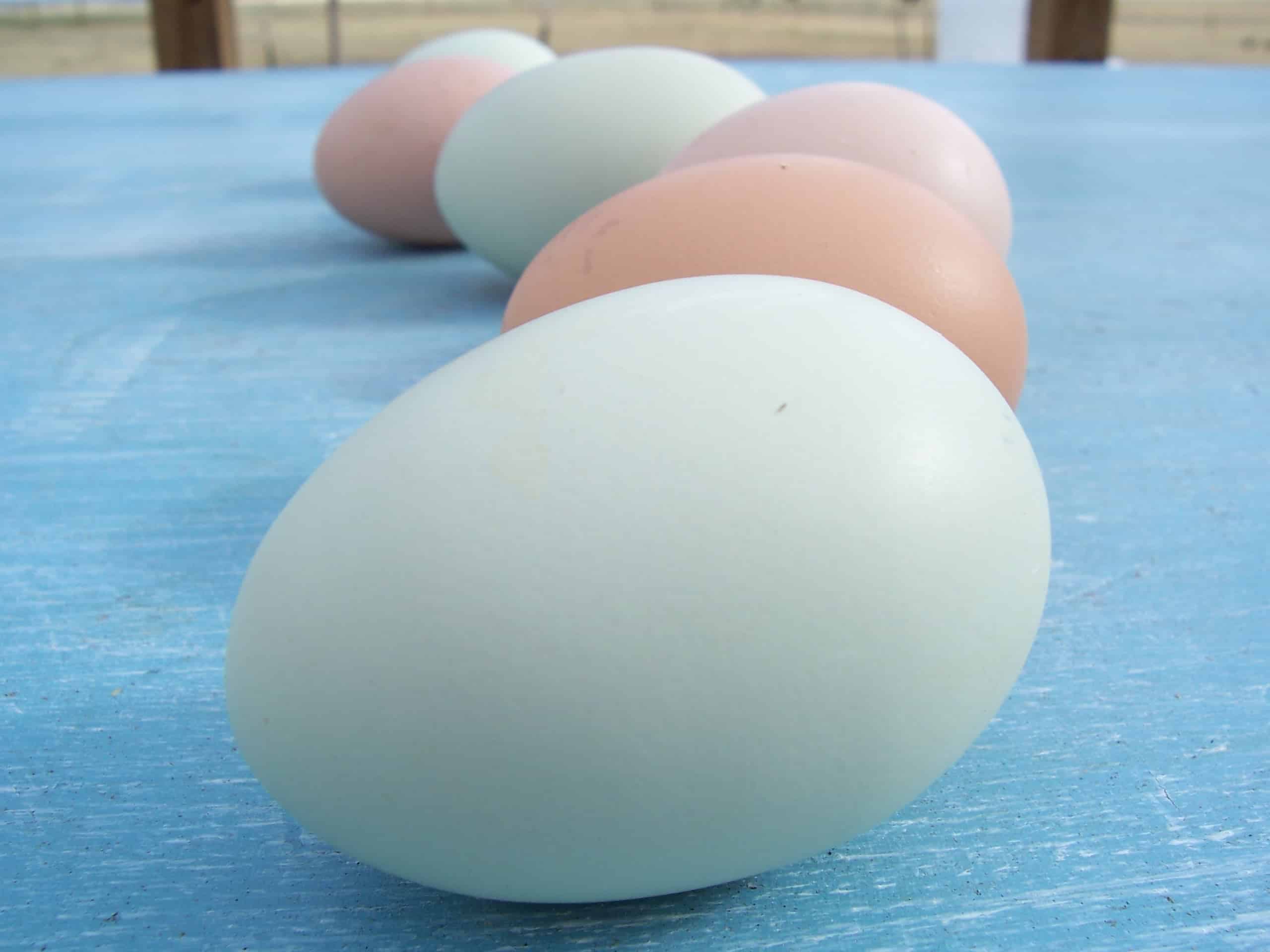
It’s either feast or famine when it comes to eggs around our homestead…
After the long, egg-less wait while our chicks matured, we are currently slammed with eggs. Blue ones, brown ones, little ones, big ones, double yolkers… Eggs everywhere.
But eventually our chickens will molt and we will be hard pressed to find enough eggs to make breakfast on a Sunday morning… So what to do?
There are a lot of different schools of thought when it comes to preserving eggs. Obviously, our homesteading ancestors had this same dilemma, and worked to find ways to save their eggs for later.
You can use a method called waterglassing, which immerses fresh eggs in a chemical called sodium silicate. However, that can reportedly prevent the eggs from being boiled later (the shells will be too soft) and the whites no longer will become fluffy after beating. Plus, you risk ingesting some sodium silicate, since egg shells are so porous. No thanks.
You can also smother your eggs by packing them in large quantities of salt, or by rubbing them with lard, grease, boric acid, or a lime/water solution. The idea is that if you clog up the egg’s pores and make them airtight, you can slow down the aging process. But from what I can tell, all of those methods have inconsistent results.
But I have a freezer. And freezing eggs seems to be one of the most simple ways to preserve them.
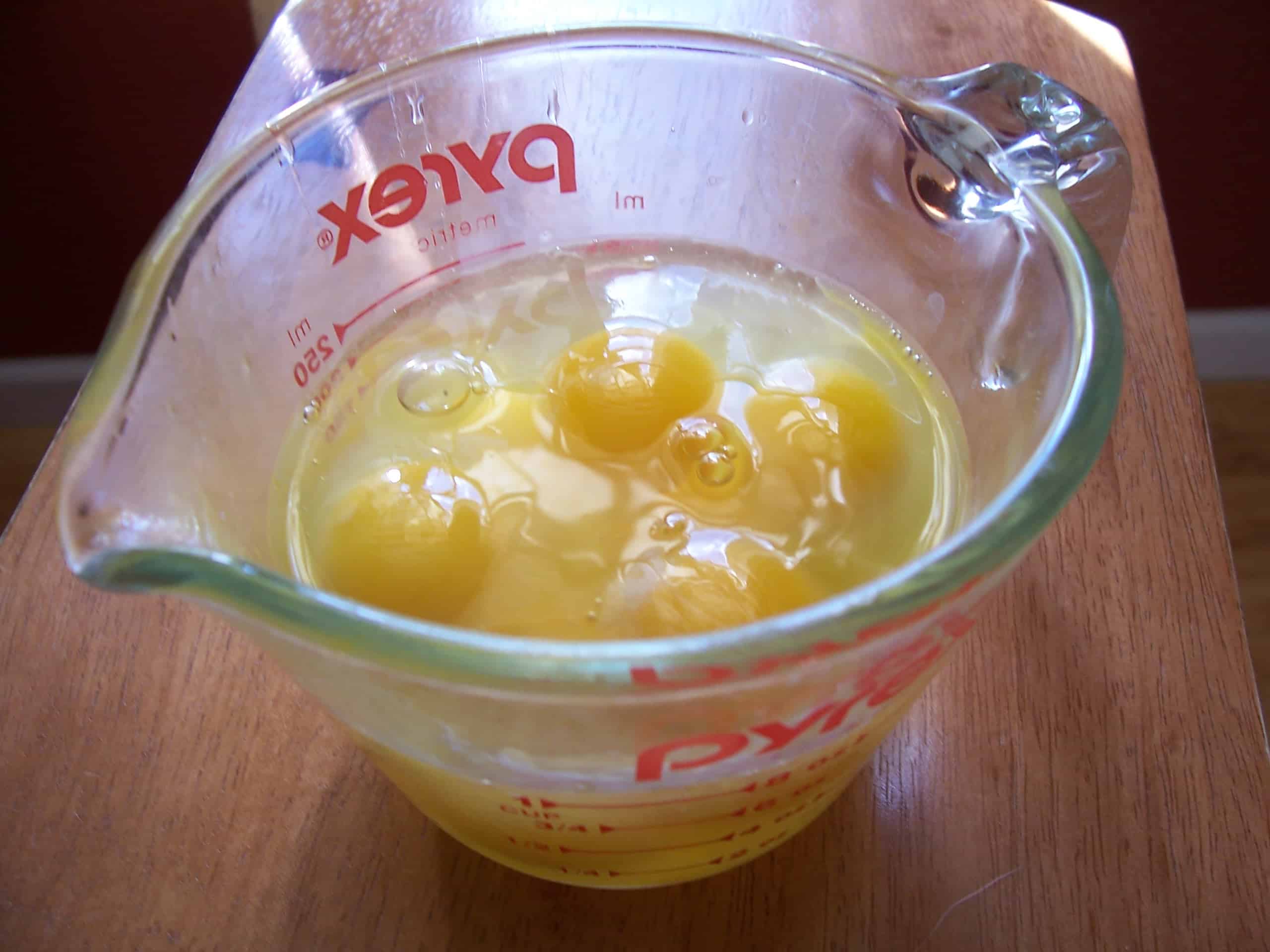
How to Freeze Your Eggs
1. Select the freshest eggs that you can.2. You can choose to freeze yolks and whites separately, or together. I chose to freeze the whole egg together.
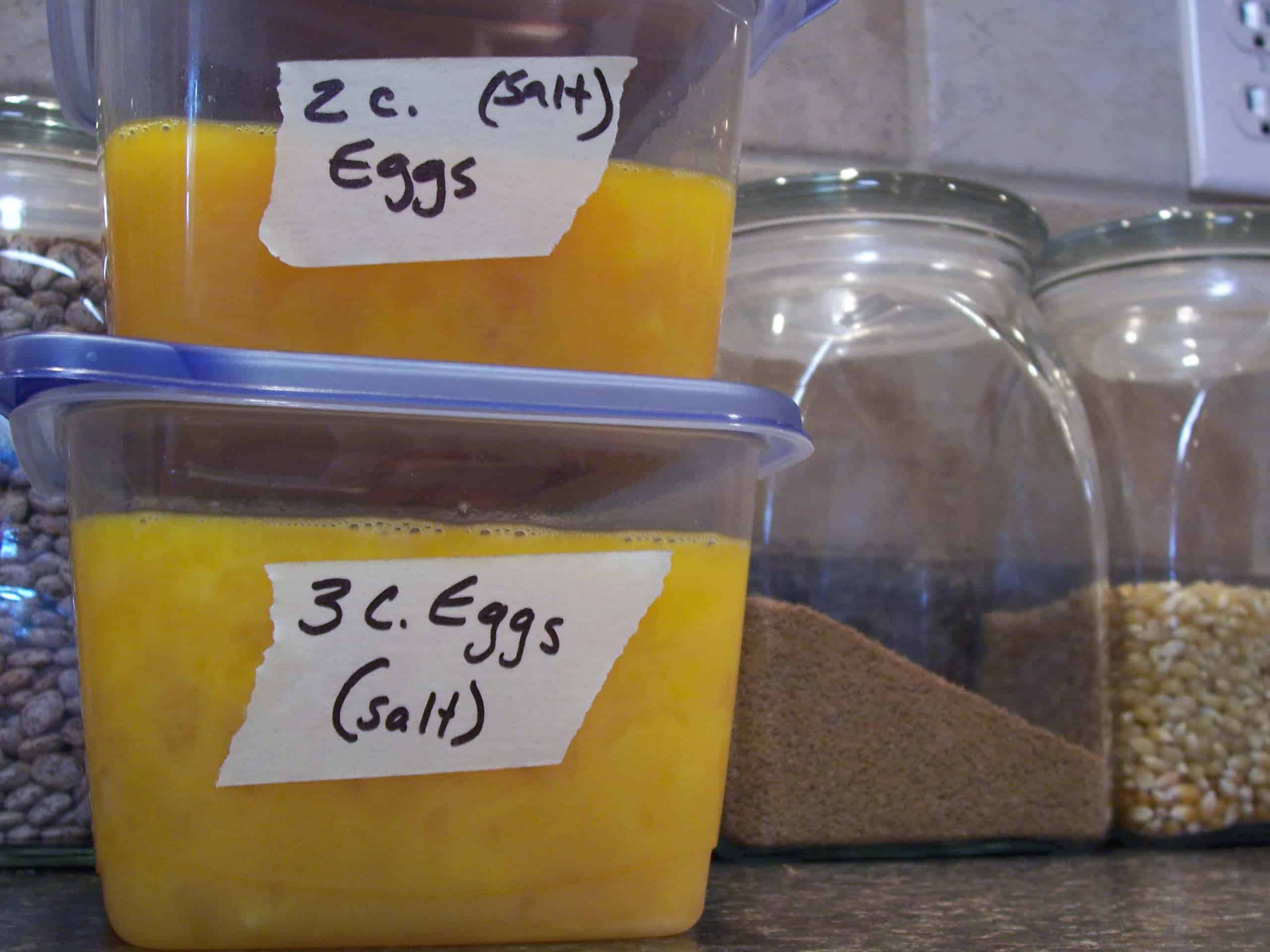
3. Crack as many eggs as you wish into a freezer safe container (I used a tupperware-style plastic container with lid). Eggs cannot be frozen in the shell since they will expand and break. For this batch of eggs, I froze 2 cups of whole eggs per container.
4. GENTLY stir the yolks and whites together. Try not to beat a lot of extra air into the mixture.
5. *Optional Step* Add 1/2 teaspoon of honey OR salt to each cup of whole eggs. This is said to help to stabilize the yolk after thawing. I figured it couldn’t hurt, so I added salt to mine. Be sure to mark what you used in the label so you can adjust your recipes accordingly, if need be.
6. Label and freeze for up to 6 months (I’d bet you could go longer, but this is what the “experts” recommend. I like to push the limits, though.
 ) Labeling might seem like a waste of time to you. But do it. Trust me. You have no idea how many times I’ve come across a mystery item in my freezer. At the time of freezing it, I was SURE I would remember what it was…
7. When you are ready to use your eggs, allow them to thaw in the fridge.
3 Tablespoons of the egg mixture = 1 egg in recipes
***Alternate freezing method*** You can also pour the scrambled egg mixture into individual ice cube trays. Just pop out a couple cubes anytime you need just an egg or two for a recipe.
Source:

Chef's Banquet ARK 1 Month Food Storage Supply (330 Servings) 13.0x13.0x13.0 - rp_0014

Wise Company 60 Serving Entrée Only Grab and Go Food Kit (13x9x10-Inch, 11-Pounds)

Mountain House #10 Can Lasagna with meat Sauce (10 - 1 cup servings)

10 Reasons Why Everyone Should Store Oats
10 Reasons Why Everyone Should Store Oats
By Stephanie Dayle - Sun Dec 02, 8:01 am
And eat them too!

Oats are one of those storage foods people LOVE to ignore. I can’t even get my own husband to eat them. Since we both came from rural areas and grew up with the same self-reliant and frugal values, I couldn’t understand this. I love oats! Why would anyone not like oats? Soon I learned it wasn’t just him, but mostly everyone else I ran into. I am convinced that most people who don’t like oats are running into one of two main problems. They never had them prepared correctly to begin with; and/or they just don’t know what to do with them other than make oatmeal. I am going to solve these problems with you today. Oats are an extremely valuable item to put in your food stores and an incredibly healthy addition to your diet and here’s why:
1. Oats Store Exceedingly Well: Oats, especially in their slightly modified form of groats, and steel-cut oats – will last a LONG, LONG time and still deliver life-sustaining nutrition. How long? Studies performed at BYU have shown oats to still deliver “life-sustaining nutrition” for over 30 years if stored correctly. Click here to see an article on Dry Canning – which would be the only way to safely store them long-term. Even the more processed form of Rolled Oats or Traditional Oats will store 20+ years if stored correctly, Provident Living’s website claims 30 years. However, processing oats shortens their storage life, so the more processed they are, the shorter their shelf life.

Ready to soak overnight
Sweet Cinnamon Oak Drink
• 1 C Old Fashioned Rolled Oats
• 1 (4-inch) Cinnamon Stick, Broken into Chunks
• 4 C Water
• Sugar or Honey to taste
In a large pitcher, soak the oats, cinnamon and water for a minimum of one hour, preferably three. Blend the mixture (remove the cinnamon stick) in a blender. Strain and sweeten to taste. Serve well-chilled or over ice.
• 1 C Old Fashioned Rolled Oats
• 1 (4-inch) Cinnamon Stick, Broken into Chunks
• 4 C Water
• Sugar or Honey to taste
In a large pitcher, soak the oats, cinnamon and water for a minimum of one hour, preferably three. Blend the mixture (remove the cinnamon stick) in a blender. Strain and sweeten to taste. Serve well-chilled or over ice.

Oatmeal
Slow Cooker Oat Meal from Food Network’s Good Eats
• 1 cup steel-cut oats
• 1 cup dried cranberries
• 1 cup dried figs (or fruit of your choice)
• 4 cups water
• 1/2 cup half-and-half
In a slow cooker (or Dutch Oven), combine all ingredients and set to low heat. Cover and let cook for 8 to 9 hours (mine looked pretty good after 4 hours but I would not have hesitated to cook them longer) stir them to check for burning or drying and add more water if needed. If you are using a slow cooker (electric crock pot) method it works best if started before you go to bed. This way your oatmeal will be finished by morning.
3. Oats are Higher in Protein Than Wheat or Rice: Oat protein is 16.9 g to that of even Brown Rice at 7.94 g. Oat protein is almost equal to soy protein, which research has shown is equal to meat, milk, and egg protein (a bonus for those of us who don’t like soy). The protein content of the different forms of oats ranges from 12 to 24%, the highest among cereals making oats an excellent choice to store as a survival food for times when other sources of protein are scarce.• 1 cup steel-cut oats
• 1 cup dried cranberries
• 1 cup dried figs (or fruit of your choice)
• 4 cups water
• 1/2 cup half-and-half
In a slow cooker (or Dutch Oven), combine all ingredients and set to low heat. Cover and let cook for 8 to 9 hours (mine looked pretty good after 4 hours but I would not have hesitated to cook them longer) stir them to check for burning or drying and add more water if needed. If you are using a slow cooker (electric crock pot) method it works best if started before you go to bed. This way your oatmeal will be finished by morning.
4. Oats Make You Feel Fuller Longer: Oats contain more soluble fiber than any other grain, resulting in slower digestion and an extended sensation of fullness. Staying fuller longer could come in handy when food is scarce.
5. Oats Will Help Control Blood Sugar and Cholesterol: Oats contain complex carbohydrates which help stabilize blood sugar and the before mentioned soluble fiber slows the absorption of glucose. The soluble fiber in oats has also been proven to lower bad cholesterol (LDL) by essentially taking it out with trash as it moves through and out of your system so to speak. Oats could be one of your only tools in treating someone with high cholesterol in a prolonged emergency when they do not have access to their statin drugs and oats could be one of many dietary tools for helping to manage blood sugar levels (assuming you don’t smother the oats in sugar).
6. Oats Can be Used as a Meat Expander: During the depression, many families added oats to their meat when grinding and cooking it to make it go further and to keep everyone fuller a little longer. A favorite place to add oats was and still is to meat loaves as oats tend to take on the flavor of whatever they are cooked with.
7. Oats Can be Grown Where Wheat Cannot: Oats are grown in temperate regions. They have a lower summer heat requirement and greater tolerance of rain than other cereals such as wheat, rye or barley. They could be grown in areas with cool, wet summers, such as the Northwest. As an example to their hardiness, they are being grown successfully in Iceland. Oats also do not require weeding as they usually choke out most weeds. Whole oats can be planted as seeds.

8. Oats Can be Ground Into Flour: Groats are a good choice for flour making, but you can also use old-fashioned rolled oats. Rolled oats can be turned into oat flour with a strong food processor while groats will require a grain mill. Oat flour adds the health benefit of oats to any baked good. Oat flour, if coming from a wheat-free facility, can also help fill the holes in a gluten-free diet. If wheat becomes more scarce, oat flour may become its substitute.
9. Oats are Inexpensive and Versatile: Beside all the uses you’ve read about so far, left over oatmeal can be made into a simple homemade oat bread. Click here to view the recipe. Not only does this save money, but it adds nutrition and depth of flavor to your bread. Oats are relatively inexpensive due to their use as livestock feed and their unpopularity as people food. When compared to other high protein grains, oats are rather inexpensive making it an important choice for food storage. Now is a good time to stock up on oats.
10. Oats Can Double as an Animal Feed: Complex carbohydrates, in oats, have been providing energy to livestock for a very long time. Horses were the reason humans started cultivating oats. They can be fed to horses, cows, dogs (in the form of oatmeal), chickens, goats, sheep and almost every other farm animal.
5 main types of oats and why it matters!
Whole Oats - These oats are usually straight from the field and still have a hull. You usually can only get these from a feed or farm supply store. Unless you have the means to remove the hull I would not recommend getting them unless you want them as animal feed or as seed – if you do buy them and want to use them as food, make sure they have not been treated with any kind of chemicals or poison.
Groats - These are oats with the hull removed, but are still difficult to come by. they can be found in co-ops and health food stores. They take a very long time to cook up, and remain hard and unpleasant to eat – BUT they are excellent if you want to grind them into flour with your home grain mill. You could also run them through your steel burrs if you have them on your grain mill, on a course grind and make your own version of steel-cut oats, which makes a very nice porridge. These are fairly difficult to grind without practice however, so another option would be if you have a roller mill or roller mill attachment for your meat grinder or KitchenAid, you can make your own old-fashioned rolled oats from groats.

Steel Cut Oats or Irish Oats
Steel Cut Oats - These are oats that have been cut by steel blades into small pieces. They cook up finer and quicker than groats to make a nice porridge, and many people say that flavor from steel-cut oats is better than the old-fashioned rolled oat porridge we know as “oatmeal.” They are also known as Irish Oats or Pinhead Oats. Cooking time on Steel cut oats is 35-60 minutes if not longer.
Rolled Oats or Old Fashioned Oats - Are a processed version of groats. They are groats that have been steamed and rolled flat to speed up cooking time to around 10-15 minutes in boiling water.
Quick Oats - Once again these are groats that have been steamed, but they have been rolled even thinner to decrease cooking time even more to 3-5 minutes in boiling water. Once oats are processed to this extreme they start losing some of their nutritional value as the processing methods begin to damage the soluble fiber within the oats.

Rolled Oats
Instant Oats- these are oats, usually quick oats, that have been pre-cooked and then dehydrated. You only need to add hot water to these oats for a finished product. They do not store well at all and are the least nutritious of all the different forms of oats, but they still have a well deserved spot in your Bug Out Bag, or your 72 hour kit. Flavored Quaker Instant Oatmeal is this type of oats.
And let’s not forget about oatmeal cookies!! While not vital to survival they sure are good and would serve as a nice easy to make comfort food – click here for a wheat free oatmeal cookie recipe!Sources:
http://www.knowledgeweighsnothing.com/10-reasons-why-everyone-should-store-oats/
http://americanpreppersnetwork.com/2012/12/10-reasons-why-everyone-should-store-oats.html


Tuesday, February 12, 2013
Food Storage Without Electricity – Top 10 Foods to Stockpile
Food Storage Without Electricity – Top 10 Foods to Stockpile

One question that I’ve been seeing a lot in preparedness discussions is how to make real, “living” food a part of your storage plans. Many food storage lists include large amounts of heavily processed food items because they are cheaper, readily available, and have amazing shelf lives.
That’s all well and fine, but you’re supposed to rotate your food storage items regularly by eating out out your storage, and I am not eager to live off of MRE’s, freeze dried meals with hydrolyzed vegetable protein, and commercially canned goods that may contain mold or other questionable ingredients. (We do keep some MREs and freeze dried meals, but they do not make up the bulk of our storage.)
So what are some of the best options for “real food” storage foods? Here are my top ten choices for foods that can be stored at room temperature for extended periods:
Home canned, dried or root cellared fruits, vegetables and other foods are not quite the nutritional powerhouses that lacto-fermented products are, but they are much easier to use for the bulk of a meal, or for an entire meal. I’ve been working hard this season to preserve the bounty from the garden through canning and and drying, and will soon be filling the root cellar. If you’re unfamiliar with home food preservation, I recommend checking out the post “New to Food Preserving – Start Here“. If you decide to purchase canned food items, make sure to buy from a reputable source.

 without a yogurt maker. While powdered milk is not ideal, it does store without refrigeration. Culturing makes the nutrients much more digestible. Milk kefir is also an option for a drinkable product. Milk kefir grains can also be used to culture coconut milk, if they are are occasionally revitalized in milk. Kefir provides protein, minerals and B vitamins. Traditional hard cheeses (such as Parmesan) may also last for months in cool dry temps.
 , or in sprouting bags
 or even nylon stockings. Mary Bell (in the Dehydrator Cookbook
 ) suggests bringing sprouting seeds with you while camping. She says to soak them overnight in a bag of water, and then place them in a section of nylon sock attached to your backpack. Rinse daily, and in a few days you’ll have live, crunchy additions to your trail rations.
 has many trace minerals that are essential to health. In my experience, the unrefined salts (Real Salt, grey sea salt, pink salt, etc.) have a “saltier” more robust flavor, meaning you can use less to achieve the same result. Salt can also be used to preserve food (such as fermenting vegetables, above, and meats). Since ancient times, salt has been also used as a valuable trade commodity.
 to extend shelf life. Under cool, dry conditions out of direct light, spices should have a shelf of two years. They can still be used after this time, but potency will diminish. Spices could also be used as a trade commodity.
Honey can store easily for over a year, possibly decades. They have found edible honey in tombs over 1000 years old. To store honey, Honey.com states:
There are many other food options, but these are my top choices for foods that store a long time without refrigeration. I’ll be covering various food preservation techniques in more detail in the coming months (it’s my thing , including drying, canning, freezing, fermenting, preserving in alcohol and whatever else I can think of trying.
Source:
http://www.commonsensehome.com/preparedness-real-foods-when-you-need-them-most/
Emergency Food Storage & Survival Handbook: Everything You Need to Know to Keep Your Family Safe in a Crisis
The Prepper's Pantry: Building and Thriving with Food Storage
Emergency Preparedness and More A Manual on Food Storage and Survival
Dinner Is In The Jar: Quick and Easy Dinner Mixes in Mason Jars or Mylar Bags (bw)

Food Storage Without Electricity
More than one group of experts are talking about increased risk of soaring food prices and economic instability. With recent droughts and other natural disasters around the world, our food production and delivery system is under a lot of of stress. If you can, I’d highly recommend stocking up on non-perishable food items.One question that I’ve been seeing a lot in preparedness discussions is how to make real, “living” food a part of your storage plans. Many food storage lists include large amounts of heavily processed food items because they are cheaper, readily available, and have amazing shelf lives.
That’s all well and fine, but you’re supposed to rotate your food storage items regularly by eating out out your storage, and I am not eager to live off of MRE’s, freeze dried meals with hydrolyzed vegetable protein, and commercially canned goods that may contain mold or other questionable ingredients. (We do keep some MREs and freeze dried meals, but they do not make up the bulk of our storage.)
So what are some of the best options for “real food” storage foods? Here are my top ten choices for foods that can be stored at room temperature for extended periods:
1. Lacto-fermented vegetables/ Home Preserved Products
Large containers of properly fermented vegetables can last for months, if not over a year, in cool conditions (for instance, an unheated basement). Captain Cook used kraut on his ships to prevent scurvy, as did other sailors. My husband remembers my mom talking about how they would preserve large crocks (15-20 gallons or more) or kraut from season to season. She said it would sometimes taste a little different but it was still good. In my own experience, this past season I keep two one gallon crocks of kraut in my basement from October until May – seven months – and the quality was still acceptable at that time. The flavor was a little more tangy/bubbly than younger kraut. At this point I repackaged it into smaller containers and put it in the fridge and freezer. Sauerkraut is very high in vitamin C, and is also a good source of vitamin K, which is often deficient in modern diets.Home canned, dried or root cellared fruits, vegetables and other foods are not quite the nutritional powerhouses that lacto-fermented products are, but they are much easier to use for the bulk of a meal, or for an entire meal. I’ve been working hard this season to preserve the bounty from the garden through canning and and drying, and will soon be filling the root cellar. If you’re unfamiliar with home food preservation, I recommend checking out the post “New to Food Preserving – Start Here“. If you decide to purchase canned food items, make sure to buy from a reputable source.
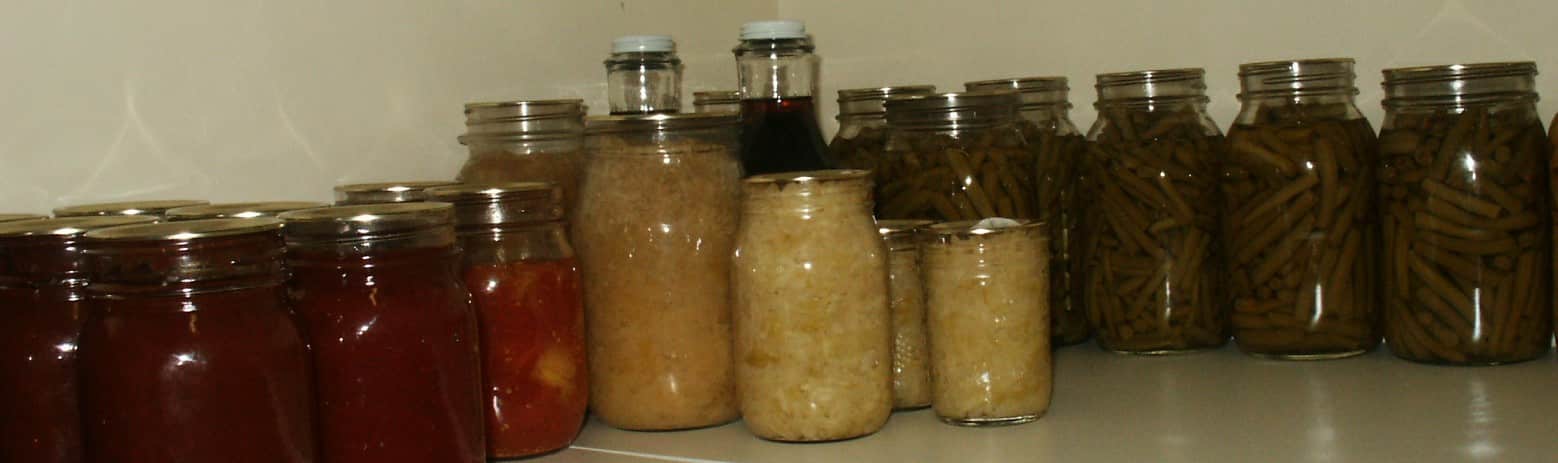
2. Live Culture Dairy
If you keep a yogurt culture that works at room temperature (such as viili from Cultures for Health, which I use), you can use it to culture powdered milk without a yogurt maker. While powdered milk is not ideal, it does store without refrigeration. Culturing makes the nutrients much more digestible. Milk kefir is also an option for a drinkable product. Milk kefir grains can also be used to culture coconut milk, if they are are occasionally revitalized in milk. Kefir provides protein, minerals and B vitamins. Traditional hard cheeses (such as Parmesan) may also last for months in cool dry temps.3. Whole grains
Whole grains (in general) have excellent shelf lives, much longer than milled flours. Places like Emergency Essentials (listed below) sell grains and grain mills (electric powered and hand powered). If you keep a sourdough culture, you can use it to make many baked goods, not just bread, such as sourdough crackers. Again, using sourdough culturing makes the nutrients in the grain more available. Grains can also be sprouted and used to make a simple essene bread, which is very filling and nutritious. Read about the bulk grain order I organized here.4. Chia seeds
Chia seeds have a shelf life of 4 to 5 years for dried seeds. They have omega-3 and omega-6 essential fatty acids, fiber, B vitamins, calcium and protein. They can be used to make drinks and no-cook puddings, as well as adding nutrition to baked goods and smoothies.5. Sprouting seeds
Sprouting seeds also have a great storage life, generally 2 years or more. They are generally high in vitamin C, and may also contain other antioxidants and essential nutrients. They also provide fresh, growing food in a hurry when it may be in short supply. Sprouting seeds are easy to use. You can grow them in handy sprouting kits, or in sprouting bags or even nylon stockings. Mary Bell (in the Dehydrator Cookbook) suggests bringing sprouting seeds with you while camping. She says to soak them overnight in a bag of water, and then place them in a section of nylon sock attached to your backpack. Rinse daily, and in a few days you’ll have live, crunchy additions to your trail rations.6. High Quality Saturated Fat
Coconut oil, lard and tallow will all keep for at least 12-18 months (most likely longer) in sealed, airtight containers kept in a cool area. Your body needs healthy fats. Your brain is largely made up of fat, as is protective coating on your lungs, and many other critical body systems. Fats are energy dense, which is also critical during emergency situations.7. Dried Legumes
Dried beans have a great shelf. They will keep around a year in just the plastic bags from the store, 10 to even 30 years if sealed in airtight containers with oxygen removed. Utah State University Cooperative Extension states: “Dry beans average about 22% protein in the seed, the highest protein content of any seed crop. They contain all essential amino acids, except methionine. Methionine can be obtained from corn, rice, or meat. Beans are an excellent source of fiber, starch, minerals and some vitamins. ”8. Real Salt
Unrefined salt has many trace minerals that are essential to health. In my experience, the unrefined salts (Real Salt, grey sea salt, pink salt, etc.) have a “saltier” more robust flavor, meaning you can use less to achieve the same result. Salt can also be used to preserve food (such as fermenting vegetables, above, and meats). Since ancient times, salt has been also used as a valuable trade commodity.9. Bulk Spices, Herbs and Teas
Don’t underestimate the power of herbs and spices. As well as being high in antioxidants and anti-inflammatories, many of them have preservative properties as well. The New Agriculturalist explains:“Cinnamon is just one of a large number of spices that have long been known to preserve food. Recent research has tried to find out exactly how effective the spice can be, over what time period, and in suppressing which bacteria. At Kansas State University, microbiologists have been testing the effectiveness of cinnamon and other spices in eliminating one of the most virulent bacterial causes of food poisoning, E.coli type 0157. Complications arising from the bacteria can include anaemia and kidney problems, and a serious outbreak can lead to fatalities. The Kansas researchers found that cinnamon added to apple juice that had been contaminated with E.coli, was able to kill 99.5% of the bacteria within three days, at room temperature. They also did tests on meat and sausage, and found that cinnamon, cloves and garlic all had a powerful ability to stop the growth of the bacteria. Other microbiologists in Tennessee have found that oils extracted from oregano, coriander and basil, also have strong anti-microbial properties. In future we may see more natural preservatives supplementing the synthetic compounds currently in use.”I store my spices and herbs in glass jars out of direct light (sometimes using the sock trick). I buy in bulk (generally from Frontier or Mountain Rose Herbs, listed on the sidebar), store a small amount in the cupboard and the rest in the bulk food storage. Both stores sell small, inexpensive glass shaker jars to repackage your spices for easy use. Larger spices, such as cinnamon sticks or other “chunky” spices, can be vacuumed sealed in mason jars
to extend shelf life. Under cool, dry conditions out of direct light, spices should have a shelf of two years. They can still be used after this time, but potency will diminish. Spices could also be used as a trade commodity.10. Sweeteners, Including Refined White Sugar, Raw Sugar, Honey and Maple Syrup
I’m sure some foodies will cringe at the inclusion of white sugar, but it is less expensive than the other options and has a great shelf life (white sugar will last indefinitely if kept in a sealed container in a cool, dry location). It can be used as a preservative for fruits. Sugar can be used to heal wounds (as can honey). (More details on the sugar for wound healing here.) I use sugar to brew my kombucha, too. Raw sugar can store as well as regular sugar, but may be cost prohibitive for many.Honey can store easily for over a year, possibly decades. They have found edible honey in tombs over 1000 years old. To store honey, Honey.com states:
Processed honey should be stored between 64-75°F (18-24°C).1 Honey can be exposed to higher temperatures for brief periods; however, heat damage is cumulative so heat exposure should be limited. It is best to minimize temperature fluctuations and avoid storing honey near heat sources.Maple syrup has the shortest shelf life – around one year in glass bottles without freezing or refrigeration.
The recommended storage temperature for unprocessed honey is below 50°F (10°C). The ideal temperature for both unprocessed and processed honey is below 32°F (0°C). Cooler temperatures best preserve the aroma, flavor and color of unprocessed honey.
There are many other food options, but these are my top choices for foods that store a long time without refrigeration. I’ll be covering various food preservation techniques in more detail in the coming months (it’s my thing
, including drying, canning, freezing, fermenting, preserving in alcohol and whatever else I can think of trying.Source:
http://www.commonsensehome.com/preparedness-real-foods-when-you-need-them-most/
Emergency Food Storage & Survival Handbook: Everything You Need to Know to Keep Your Family Safe in a Crisis
The Prepper's Pantry: Building and Thriving with Food Storage
Emergency Preparedness and More A Manual on Food Storage and Survival
Dinner Is In The Jar: Quick and Easy Dinner Mixes in Mason Jars or Mylar Bags (bw)
Subscribe to:
Posts (Atom)